
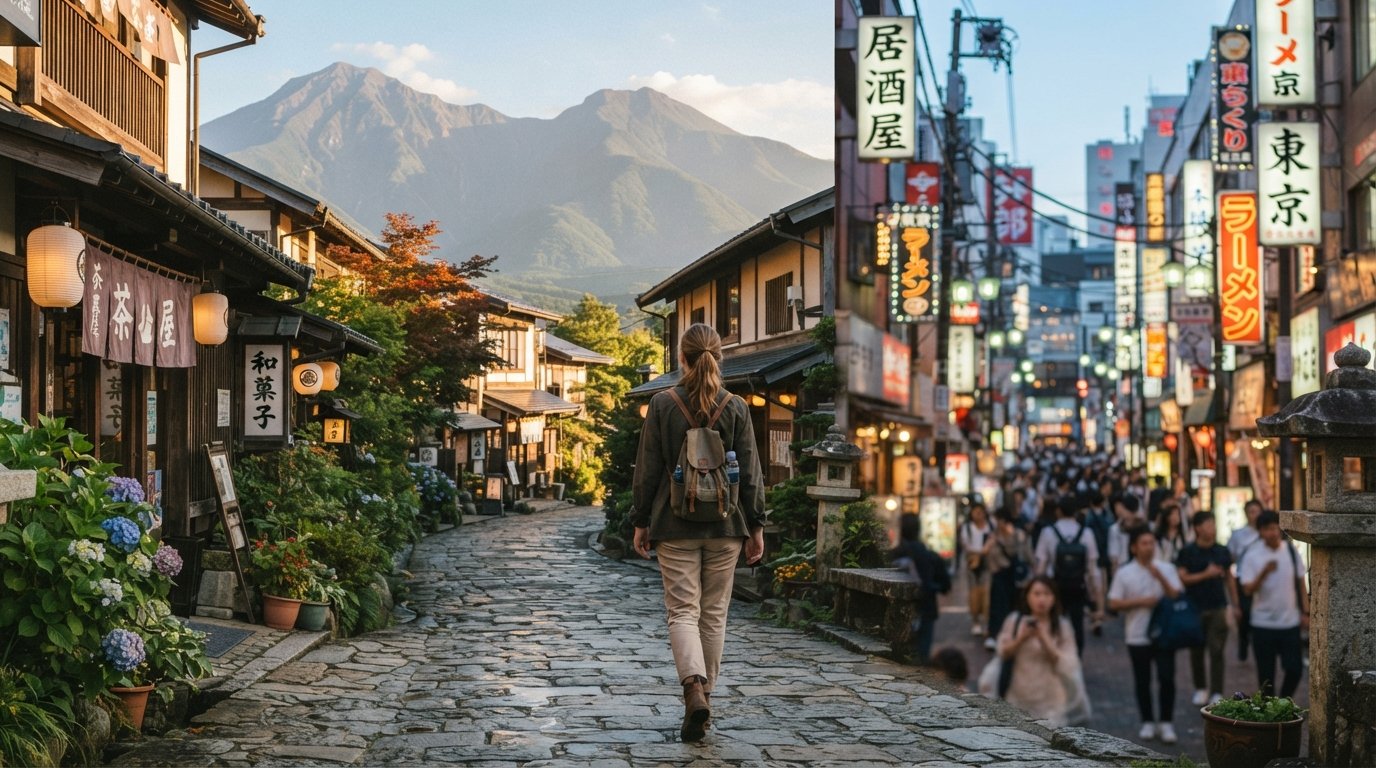
You may step away from a packed city itinerary and find a slower pace in a small Japanese community. After Tokyo, Kyoto, and Osaka, a rural stop can give your trip a different shape. You can see old homes, walk historic streets, and notice how daily life follows local rhythms. The title’s “top destination” claim is an appealing travel idea, not a verified ranking. These places are not simply quieter versions of major cities. They offer another way to experience the country, with more time for local traditions and fewer crowds around familiar sights. Some stops fit into a regional route, while others call for more planning and patience. That tradeoff matters when you have limited travel days. The right choice depends on your interests, schedule, and comfort with rural logistics. This article promises seven distinct escapes, from mountain hamlets to coastal towns. First, consider why these smaller places appeal to visitors.
Key Takeaways
- Smaller destinations offer historic architecture and a quieter pace.
- Choose a region before adding remote stops to your itinerary.
- Check local bus times, opening days, and return connections.
- Stay overnight when you want to see a town after day visitors leave.
- Respect homes, workshops, and residents while exploring rural streets.
Why Japan’s Hidden Villages Are 2025’s Top Destination
A busy city sightseeing day can move from one crowded landmark to another; a small town often grows quiet after day-trippers leave. That slower pace is a real draw for tourists who want a different experience in the country. It can also give foreign tourists more room to notice daily routines.
Rural places preserve architecture, old roads, and local customs that large cities have changed over time. You might pass a wooden merchant house, follow a historic path, or see craft work in a family workshop. These visits reward curiosity more than a checklist of famous sights. You can take time to learn what makes one place distinct.
These visits reward curiosity more than a checklist of famous sights.
Fewer crowds do not mean that every hidden gem feels empty. Popular villages can draw day visitors, and small streets still serve residents. A quieter stop may offer a stronger sense of place, but you need to respect the people who live there.
The tradeoff is practical: fewer visitor services can mean fewer meal choices, shorter opening hours, and less English help. Some villages have limited local transport, so a missed bus can change your day. Plan meals and connections with care, especially when your route includes more than one small town.
Time also shapes what you can enjoy. A short visit may suit a compact historic district, while a remote valley can require an overnight stay. The best choice depends on what you want to see and how much planning you can manage. Use your interests and travel comfort to narrow the options.
How to Choose a Village That Fits Your Trip
A thatched-roof mountain settlement and a small port town call for different plans, even if both look peaceful in a photo. Choose by setting, interests, travel time, and access to food or lodging. Start with your limits, then build an itinerary around places that fit them.
Use this checklist to compare places before you add them to a guide or route map. It helps separate a convenient stop from a remote detour. Do not treat a long transfer as a quick side trip.
- Preferred setting: choose a mountain valley, forest path, canal street, or coast.
- Tradition or craft: name one local feature you want to see or learn about.
- Realistic travel time: count connections and return travel, not just the main train ride.
- Food and lodging: check whether meals and overnight rooms suit your schedule.
A convenient stop sits near a larger route or has a simple local connection. A remote detour may need several bus changes, careful timing, or a car. Ask how much of your day the journey will take, and leave room for delays. A good itinerary gives you time in the place, not only time getting there.
One useful term for a mountain stay is gassho-zukuri, a traditional farmhouse style with steeply pitched thatched roofs designed to shed heavy snow. The roof shape helps explain why these homes look so different from ordinary town houses. If historic mountain architecture draws you, begin with Shirakawa-go and Gokayama.
Shirakawa-go and Gokayama: Thatched Homes in the Mountains
The steep roofs of Shirakawa-go and Gokayama help shed heavy winter snow. Their shape also gives the farmhouses a striking profile against the compact mountain valleys. Practical design makes the architecture memorable. Shirakawa-go is a UNESCO World Heritage village.
What the steep roofs were built to do
Gassho-zukuri farmhouses have sharply pitched thatched roofs designed for snowy conditions. The steep angle helps snow fall away instead of building up heavily overhead. These homes stand close together in a valley, with mountains shaping the view and the feel of the town.
Snow can make the village look especially dramatic in winter, but it also changes walking conditions. Paths may be slippery, and visitors need suitable footwear. In warmer weather, the same roofs rise above green fields and gardens. The architecture remains the center of the visit in every season.
How to experience the villages beyond a quick photo stop
Shirakawa-go is the best-known stop, while Ainokura and Suganuma in Gokayama offer a quieter visit. The two hamlets sit about 30 minutes farther by bus. Choose the smaller hamlets if you want less time among tour groups and more time in a small setting.
Staying overnight, when possible, gives you a chance to see the village outside its busiest day-trip period. It also lets you move at a gentler pace rather than rushing through the main streets. Check lodging details early, since rural rooms can be limited on popular dates.
Residents still live and work in these homes. Do not treat inhabited houses as photo props or step onto private land for a better view. Keep to public paths and follow local signs. The visit is richer when you see the homes as part of a living community.
The mountain heritage offers a clear contrast with the next escape: a historic walking route between two post towns.
Walk the Nakasendo Between Magome and Tsumago
The walk between Magome and Tsumago covers 8 km through bamboo and cedar forest and takes about 3 hours. That distance gives you a clear planning anchor for the day. Allow time beyond the trail to enjoy both towns. The route once linked two post stations on the Nakasendo road between Edo and Kyoto.
What to expect on the forest path
Magome and Tsumago preserve the feel of former post stations, where travelers once stopped along the road. Black wooden houses, paved alleys, and small temples give each town a historic character. Between them, the path passes through forest and quieter stretches of countryside.
The walk is not only a line between two points. You move through changing shade, village edges, and wooded sections. Some parts rise or fall, so comfortable shoes matter. Carry water and take breaks when you need them, rather than trying to keep a city sightseeing pace.
How to make the walk work as a day trip
You can fit the walk into a day trip if you plan the start and finish carefully. Leave enough time to eat in the towns and look around before or after the trail. Check local connections for your dates, since the route’s appeal does not remove the need to reach both ends.
A day visit is possible, but staying nearby changes the pace. You can explore the streets without watching the clock as closely, and begin the walk rested. A slower visit also gives you time to notice details along the path that might blur during a tight schedule.
The Nakasendo is a good match for travelers who want a walk with a clear historic setting, not a long mountain trek. Its black houses and forest route are distinct from the canal towns ahead. Next, consider two smaller settlements shaped by water, local craft, and regional character.
Hida-Furukawa and Gujo Hachiman: Canals and Local Traditions
Hida-Furukawa is about 15 minutes by train from Takayama, while Gujo Hachiman calls for planning around a different kind of visit. The first offers canals and sake shops; the second draws visitors for its summer dance. Festival timing matters if you want the full event. Check dates and room options before planning around a festival.
Hida-Furukawa’s canals, sake, and festival
Hida-Furukawa has about 15,000 residents and a calm town center. Koi carp swim through canals beside streets and old sake warehouses. The water is part of the town’s everyday look, not just a feature built for visitors.
The Furukawa Matsuri takes place in April and gives the town a different energy from an ordinary day. Sake shops and canals still make sense outside the event, so you can visit without centering your trip on a festival. If the festival is your main reason to come, plan for higher demand and a busier experience.
Gujo Hachiman’s water and summer dance
Gujo Hachiman is known for the Gujo Odori, a traditional dance festival held during Obon. The dancing continues through the night. That schedule can shape both the visit and the feel of the town, so consider whether you want a lively event or a quieter stay.
Outside the summer dance, Gujo Hachiman has an artisan-village feel, with water channels and small streets. You can explore at an unhurried pace and notice how water threads through the town. Festival nights bring a very different mood, along with more people and greater pressure on available rooms.
Both towns show how local traditions fit into daily life, but each asks for a different kind of planning. Hida-Furukawa can work as a brief stop from Takayama. Gujo Hachiman may be more rewarding when you choose your dates with its dance in mind. From inland waterways, turn to merchant streets and a former post town.
Sawara and Ouchi-juku: Merchant Streets and Post-Town Life
Sawara is a merchant town about 90 minutes from Tokyo, with an Edo-era canal and wooden warehouses. It offers an accessible look at old commercial streets without requiring a long trip from the capital. Its canal shapes the visit, while Ouchi-juku offers a separate regional setting. Do not treat the two as one easy day trip.
Sawara’s canal-side merchant quarter
The canal and warehouses point to Sawara’s history as a place of trade. Wooden buildings line the water, and the old streets make a gentle route for walking. The town feels different from a modern business district, even though daily life continues around its historic core.
Sawara is also linked to Ino Tadataka, whose house-museum is in town. He made an accurate map of Japan in the 19th century. A visit to the museum adds a personal story to the merchant setting and shows how travel and mapmaking once relied on careful work.
Ouchi-juku’s preserved post-town atmosphere
Ouchi-juku lies in Tohoku, about 3 hours from Tokyo. Its preserved post-town streets offer a different choice from Sawara’s canal quarter. Regional distance and travel time make it a separate stop, rather than a quick addition to a Sawara outing.
One local specialty is negi soba, served with a whole leek in place of chopsticks. The unusual way of eating it gives the meal a distinctive place in a visit. Follow local dining customs, and take time to understand the setting rather than treating the dish as a photo prop.
Sawara suits a traveler looking for a merchant-town walk within reach of Tokyo. Ouchi-juku fits better when your itinerary already includes Tohoku. Each place has its own character and should be planned on its own terms. From inland streets, the route now turns to a coastal settlement where houses meet the water.
Ine: A Fishing Village Built Around the Bay
In Ine, boats can sit beneath the living quarters of wooden houses beside the sea. About 230 of these homes line the bay, creating a layout unlike an ordinary port. The working design is central to the village. Visitors should treat the waterfront as a lived-in place, not an open-air attraction.
How funaya houses work
The houses are called funaya. Their ground floors function as boat garages, while living quarters sit above. A single street runs along the bay, with homes and water close together. The arrangement makes daily life visibly tied to fishing and the coast.
That close view can tempt visitors to peer into doorways or photograph private spaces. Resist that urge. Residents use the homes and the narrow street every day, so keep your distance and follow any posted signs. Public views of the bay are enough to appreciate its unusual design.
What an overnight stay adds
Visitors can rent a funaya for an overnight stay. Sleeping in one can give you more time to experience the quiet bay, especially after day visitors leave. It is a particular kind of lodging, so choose it only if it fits your route and comfort level.
Do not assume every waterfront building welcomes visitors. Check the room’s location, access rules, and booking details before you commit. A respectful stay means treating the house as someone’s home and the village as a working community.
Ine gives a coastal visit a close connection to boats and the bay. The next stop also faces the sea, but its character comes from a historic harbor and a film association. Tomonoura sits on the Seto Inland Sea, with waterfront streets worth a slower look.
Tomonoura: Harbor Streets and a Ponyo Connection
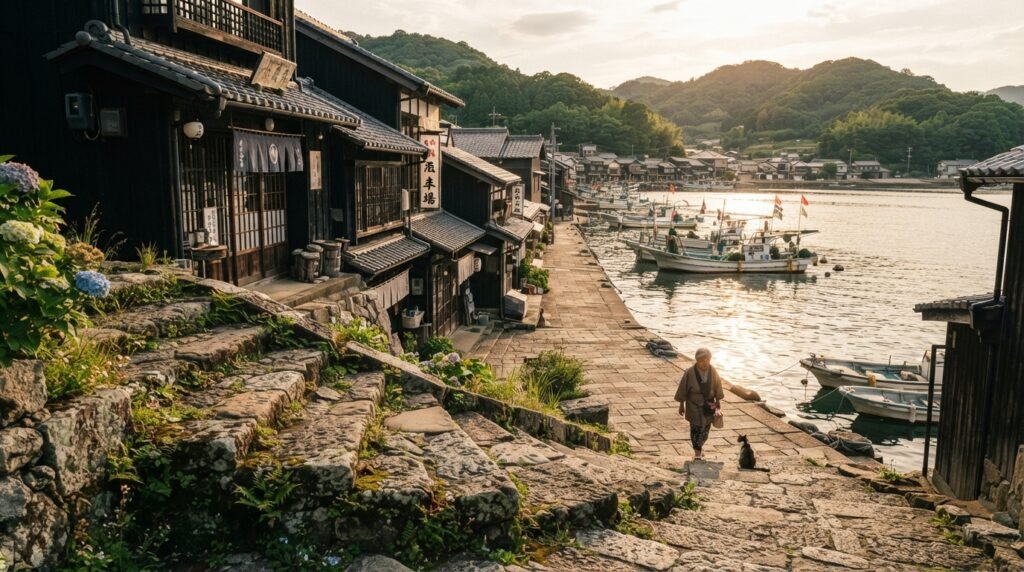
At Tomonoura, the harbor, old houses, and stone steps meet along the water. The small port town sits on the Seto Inland Sea and invites a slower walk. Look beyond the film link to see its older streets and waterfront details. The Ponyo connection is context, not the only reason to visit.
The port’s historic character
Tomonoura is associated with the setting inspiration for Hayao Miyazaki’s Ponyo. That link may bring the town to a traveler’s attention, but the harbor has its own appeal. Black wooden houses, stone steps, temples, and an old wooden lighthouse shape the waterfront.
Small details reward a slow pace. You can notice how buildings face the harbor and how stone steps lead between levels of the town. The old wooden lighthouse adds a clear landmark without turning the visit into a long list of stops.
A slower visit by the water
Walk through the port streets rather than stopping for one quick photo and leaving. Give yourself time to look from the water toward the houses, then follow the lanes toward temple steps. The town’s scale suits a relaxed visit more than a rushed tour.
Residents still use these streets, and visitors share the harbor with local life. Keep noise low and leave clear space for people going about their day. If a street feels private, choose another public route instead of pressing farther into the neighborhood.
Tomonoura offers a compact harbor visit with historic architecture and a well-known film association. Onomichi is another Seto Inland Sea destination, but it climbs a hillside and has a distinct town identity. Its steep lanes, temples, and views create a different kind of coastal stop.
Onomichi: Temples, Cats, and Seto Inland Sea Views
Onomichi climbs a hillside above the Seto Inland Sea, with paved stair streets leading past temples and views. The coastal town has about 14,000 residents. Take the lanes slowly to enjoy the changing outlook. Separate a town visit from the longer Shimanami Kaido cycling trip.
The hillside lanes and temple walk
Onomichi’s steep streets can turn a short walk into a climb. Temples sit among greenery, and stair lanes open to views across the inland sea. Cats are another familiar part of the town’s identity, especially around Cat Alley.
Wear shoes that suit paved steps and uneven slopes. You do not need to cover every lane to get a feel for the town. Pick a temple or viewpoint as an anchor, then allow time to wander and pause along the way.
Starting a Shimanami Kaido trip
Onomichi also serves as a starting point for the Shimanami Kaido cycling route. That route links islands across the Seto Inland Sea and can turn a brief stop into a more active itinerary. The cycling experience takes different planning from a town walk.
If you want to explore the lanes and cycle, decide how much time each activity deserves. A quick town visit can work as a first look, while a longer trip needs more room for riding and island stops. Avoid packing both into a rushed day.
Onomichi combines hillside streets, temples, cats, and sea views in one compact town. Its cycling route adds another way to explore the island region, but it need not define your whole visit. Together, these escapes show why regional planning matters: grouping nearby places can cut backtracking and keep the trip manageable.
Group the Villages by Region to Avoid Backtracking
Putting distant stops into one rushed itinerary can leave you spending more time in transit than in the towns. Group nearby places by region instead. Build around geography, then check whether each connection works for your dates. Regional clusters reduce backtracking, but they do not guarantee easy connections.
These route ideas show how different destinations can fit together. The central Alps cluster combines mountain architecture with historic streets, while the Seto Inland Sea focuses on port towns. Rural Shikoku offers a more remote kind of exploration.
| Route cluster | Places to combine | Main travel character |
|---|---|---|
| Central Alps | Shirakawa-go, Ainokura, Hida-Furukawa, Magome | Mountain architecture and historic streets |
| Seto Inland Sea | Onomichi, Tomonoura, Takehara | Port towns and coastal culture |
| Rural Shikoku | Yokaichi, Nagoro | Remote rural heritage and village-scale exploration |
Use the table as a starting point, not a promise that every town sits next door. Even places in one region can need separate trains, buses, or overnight stops. Check actual connections before buying tickets or reserving rooms.
Some routes may work well by public transport, while others need more local planning. Leave space for a late bus or a change in opening hours. The route should fit the time you have, not just the number of places you hope to see.
Choosing a cluster turns a list of names into a more workable trip. Once you pick a region, the next practical question is how to reach the final stretch beyond the main rail line.
Getting to Smaller Destinations by Train, Bus, or Car
A train may bring you to a small town, but the final connection can still take planning. A local bus, taxi, or rental car may cover the last leg. Check the whole route, not only the main train. Some remote places need two or three local bus changes.
Use trains and buses where they make a practical connection
Regional trains can make a reliable base for towns along major lines. Local buses reach some villages, but they may run less often than city routes. Rural connections can involve limited English or bookings in Japanese, so save key names and details before you travel.
Consider a rental car for remote final legs
A rental car can help when a village sits far from frequent public transport. It is not needed for every stop, and it does not remove the need to check road access or parking. Compare the full route before deciding; a rail pass does not always save money.
| Transport option | Where it can help | Planning limitation | Useful action |
|---|---|---|---|
| Regional train | Towns on main rail corridors | May stop short of village centers | Map the last leg |
| Local bus | Village routes from rail stations | Limited runs or language support | Check the timetable |
| Rental car | Remote areas with few bus links | Driving and parking add tasks | Confirm pickup and road access |
Use this arrival checklist before you leave your hotel or station. A missed return bus can affect meals and overnight plans, especially in a small town.
- Verify the last return connection.
- Confirm operating days.
- Carry the destination name in Japanese.
- Keep a backup plan for meals.
- Allow buffer time for delays.
Each destination has its own access pattern, so build your plan around the route rather than assuming one travel method will work everywhere. Once the connections make sense, choose a season that fits the place and the experience you want.
When to Visit: Seasonal Highlights Across Rural Japan
The same mountain village can look snow-covered in winter and green in spring. Choose a season for the setting or event you want, then check local conditions close to travel. Each season changes the feel of a visit. Bloom and foliage timing varies, and no precise annual forecast is available here.
| Season | Destinations or experience | Planning note |
|---|---|---|
| Spring | Magome and Tsumago, cherry blossoms | Shirakawa-go’s rice paddies flood in May |
| Summer | Gujo Hachiman, Gujo Odori during Obon | Plan around the festival dates |
| Autumn | Mountain villages, fall foliage | Color timing changes each year |
| Winter | Shirakawa-go under snow | Wear footwear suited to snowy paths |
Spring can bring blossoms to the Nakasendo towns, while flooded rice paddies add a seasonal look in Shirakawa-go in May. The exact timing can shift with local weather. Avoid planning around a precise bloom date unless you have current local updates.
Summer has a strong reason to visit Gujo Hachiman: Gujo Odori takes place during Obon, with traditional dancing continuing through the night. That festival can make the town more lively and affect room availability. Choose it for the event, not for a quiet summer evening.
Autumn is a strong season for many mountain villages, with foliage adding color to forest paths and valley views. Winter brings snow to Shirakawa-go, but suitable footwear matters on slick or snowy ground. Weather can affect access as well as scenery, so keep your plans flexible.
Use the season to choose the mood of your trip, not as a guarantee of a specific view. Once dates are set, consider whether an overnight stay would give you more time to enjoy the place.
Staying Overnight for a More Local Experience
An overnight stay lets you experience a village after day visitors leave and gives you more time for a slower morning. A ryokan, or traditional inn, can make the stay part of the trip. The details vary by property. Confirm meals, bathing, and room features before booking.
What a traditional inn stay involves
A ryokan stay may include a kaiseki meal served course by course, bathing, a yukata robe, and a futon. The order and services can differ between inns. Ask what your room includes, especially if you need a meal at a set time or have bathing questions.
Use this simple sequence to know what to expect. The exact routine depends on the inn, so follow its instructions rather than assuming every place works the same way.
- Check in and ask about meal and bath times.
- Follow the inn’s bathing guidance.
- Change into the yukata if one is provided.
- Settle in for dinner and futon bedding.
When a temple lodging is a different fit
A temple stay at Koyasan offers a different experience from a ryokan. It may include morning prayers and Buddhist vegetarian cuisine. This can be a meaningful way to learn about temple life, but it follows the host temple’s schedule and customs.
Choose lodging based on the time and culture you want to experience. Not every inn offers the same services, and a temple stay is not simply a room in a quiet building. Read the stay details and confirm what is included before you book.
Sleeping in a small town can change the visit from a short stop into a fuller stay. It also means sharing more space with residents and local hosts. From lodging customs, turn to the simple ways you can respect everyday life in rural Japan.
Respect Local Life While Visiting Rural Japan
A preserved street may look like a scene from the past, but residents still use it every day. Keep that in mind as you explore homes, shops, and workshops. Private property is not part of the visitor route.
Use these basic habits in any small community. Local signs may set extra rules for a particular street, home, or activity, so follow the instructions where you visit.
- Stay on public paths.
- Do not enter private property.
- Ask before photographing people.
- Keep noise low in residential lanes.
- Follow local signs and waste instructions.
Homes and workshops are part of living communities, not scenery made for visitors. A doorway may lead to someone’s home, and a quiet lane may be a work route. Give people room and avoid blocking entrances while you look or take pictures.
Foreign tourists may not know every local custom, and expectations can vary by place. Check locally for rules tied to a specific activity instead of assuming one rule applies everywhere. If a sign is unclear, ask a host or staff member before proceeding.
Respectful behavior does not need a long checklist once it becomes part of your travel habits. Keep to public areas, ask when unsure, and leave each place as you found it. Those choices make a rural itinerary easier to share with the people who call these towns home.
Build a Realistic Itinerary Around the Time You Have
Start with the number of days available, not a wish list of distant places. A short trip can focus on one region, while a longer break can add more stops. Let time set the scale of your route. These example durations are sketches, not guarantees.
| Time available | Example village combination | Trip character |
|---|---|---|
| 2 days | Yokaichi and Nagoro | Rural Shikoku |
| 3 days | Onomichi, Tomonoura, Takehara | Seto Inland Sea |
| 4 days | Shirakawa-go, Ainokura, Hida-Furukawa, Magome | Central Alps |
Use the combinations as route ideas, not fixed promises about travel hours. The actual time depends on connections, operating days, and how long you want to stay in each place. Some remote stops can require a car or multiple local bus changes.
A realistic itinerary leaves room for meals, walks, and small delays. Do not count every hour as sightseeing time. If you reach a town near closing time, you may have less time than the map suggests.
Build your plan in four steps:
- Choose one region.
- Check every connection and opening day.
- Reserve overnight stays early enough for your chosen dates.
- Keep one flexible block for weather or delays.
Pay special attention to the final connection and the last return option. A route can look simple on a map but still involve a long wait between local services. Keep the itinerary flexible enough to handle that kind of change.
Think about what you want from the trip: a historic walk, a quiet overnight, a festival, or a coastal view. A smaller number of well-matched stops can give you more time to notice each place. Save a short list of suitable stops, then choose one region for your first rural detour.
Choose one region, check every connection, and leave room for a change in weather or timing.
Conclusion
A smaller destination can become the highlight of your trip when its pace and logistics fit your interests. Choose for fit, not for a supposed ranking. The country’s hidden gems reward travelers who leave enough time to see them well.
Your next step is simple: save one regional cluster and check its transport connections before booking. Compare the travel time with the days you have, then choose dates that work for the places you want to visit. Start with one region and check its connections.
FAQ
How many days should I plan for a trip to Japan’s smaller towns?
Can I reach Gokayama without renting a car?
What is the best season for visiting rural Japan?
Is a Japanese-speaking guide necessary in smaller towns?
Can I stay overnight in a traditional farmhouse in Shirakawa-go?
What should I know before photographing people in a small town?
Do I need a car to visit Japan’s rural villages?
About the Author